With their brilliant orange-and-black wings, monarch butterflies are among the most recognizable—and remarkable—butterflies in North America.
Each autumn, eastern monarchs embark on an extraordinary migration of up to 3,000 miles, traveling from the United States and Canada to the mountains of central Mexico. No single monarch completes the entire round trip. Several generations make the journey north, yet the final generation of the year instinctively knows how to return to the same forests where its ancestors spent the winter.
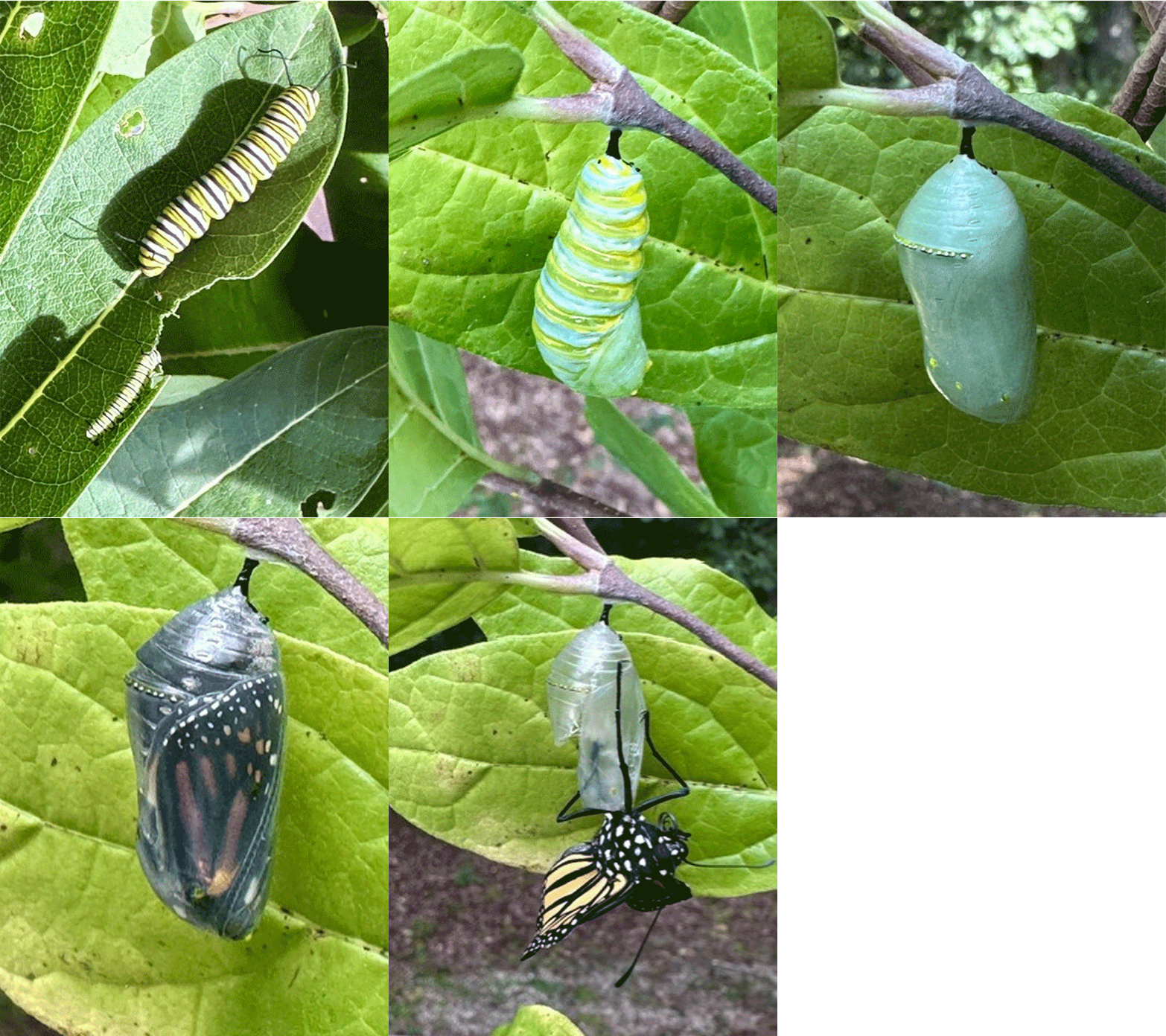
Their transformation is just as fascinating. A female lays her eggs on milkweed, the only plant monarch caterpillars can eat. After feeding and growing, the caterpillar forms a beautiful jade-green chrysalis. About 10 days later, an adult butterfly emerges.
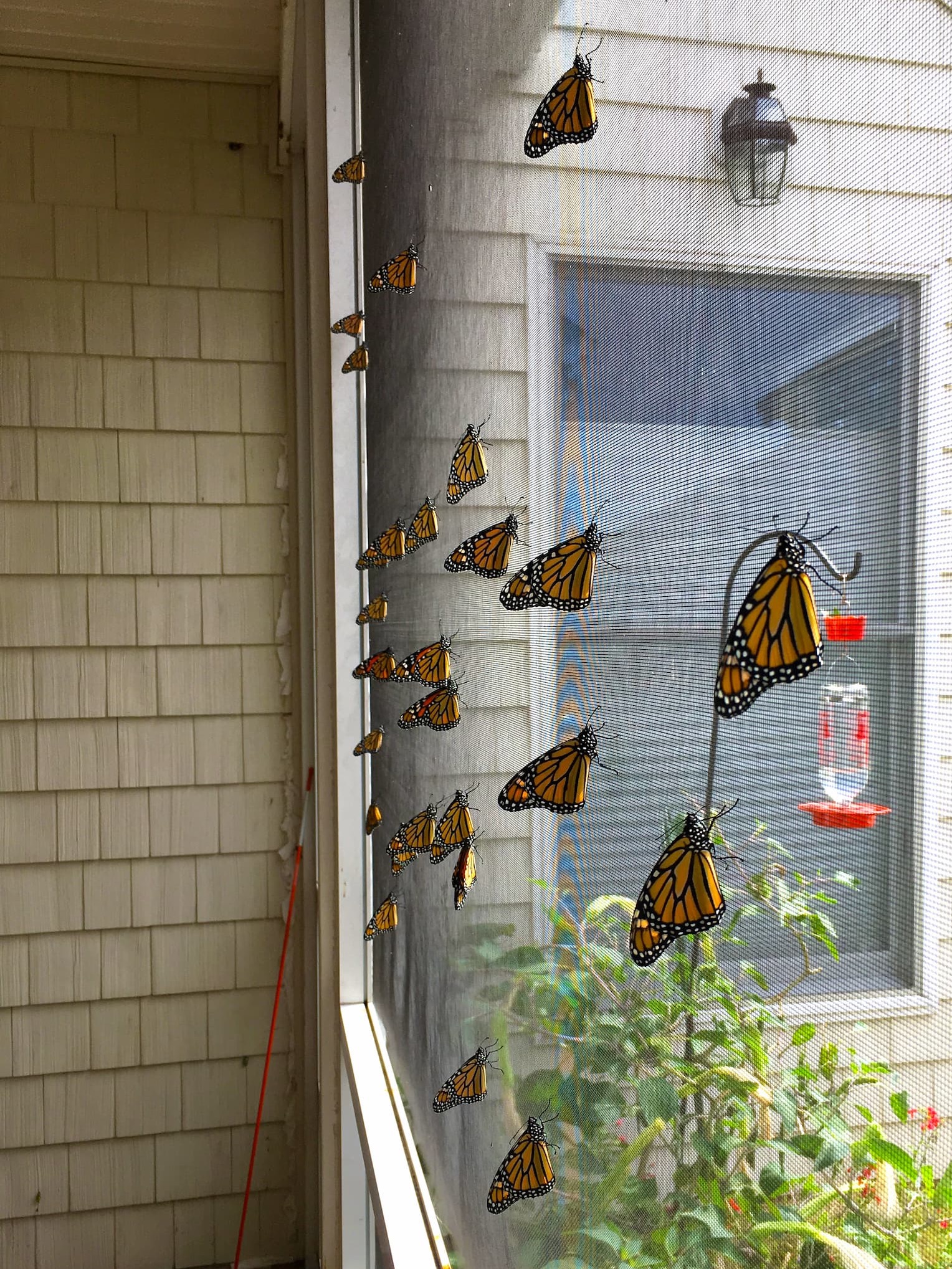
Monarchs have a special connection to the Fitch family. R.B.’s sister, Anne, has been raising them for years and has released more than 3,000 monarch butterflies since she began—an extraordinary contribution to their survival.
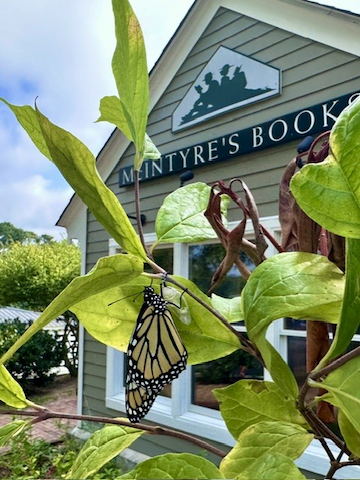
Recently, naturalist Tom Earnhardt began raising a small group outside McIntyre’s Books, and we were delighted to see the first monarch emerge. Watching it open its wings for the first time offered a wonderful glimpse into a transformation that usually happens quietly among the leaves.
You can help monarchs at home by planting native milkweed for caterpillars and nectar-rich flowers for adult butterflies. Avoid pesticides and allow naturally occurring milkweed to remain whenever possible. While raising a few monarchs can be rewarding, conservationists agree that creating healthy outdoor habitat is the best way to support them.
Monarch populations have declined significantly as milkweed and natural habitat have disappeared. That makes every garden, every patch of milkweed and every newly emerged butterfly especially meaningful.
The next time you are near McIntyre’s, take a moment to look for our newest winged residents. You may witness a small part of one of nature’s most remarkable journeys—and another chapter in Fearrington’s enduring love of gardens and wildlife.