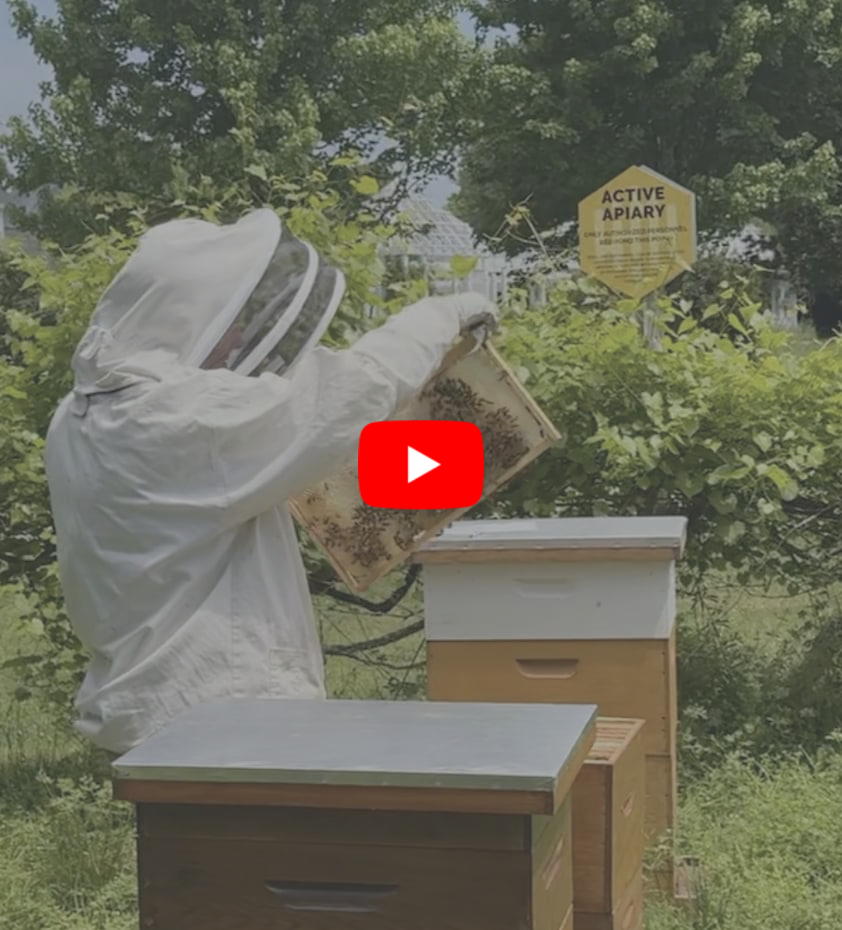
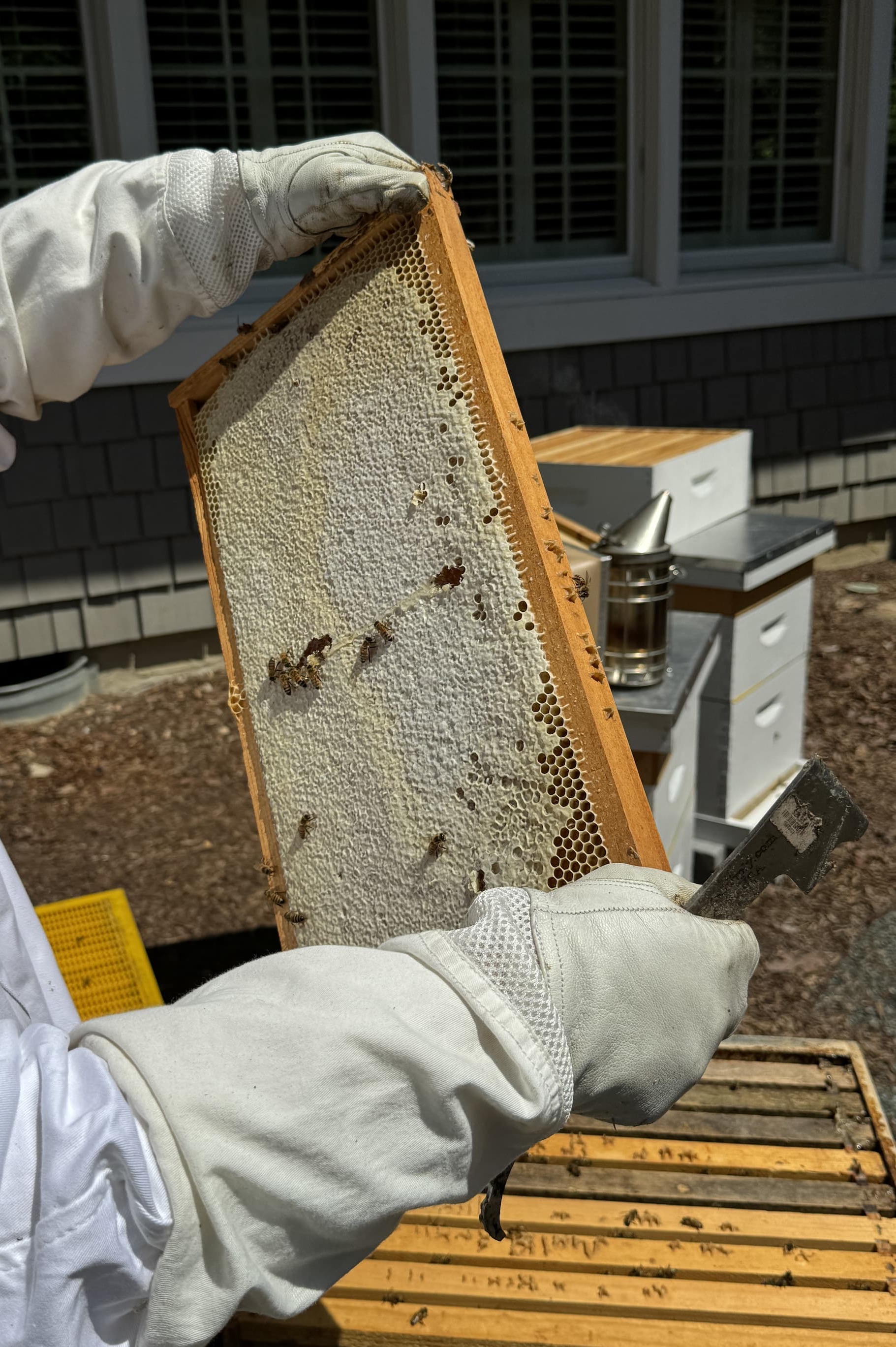
A couple of weeks ago, we opened up the hives and harvested our honey.
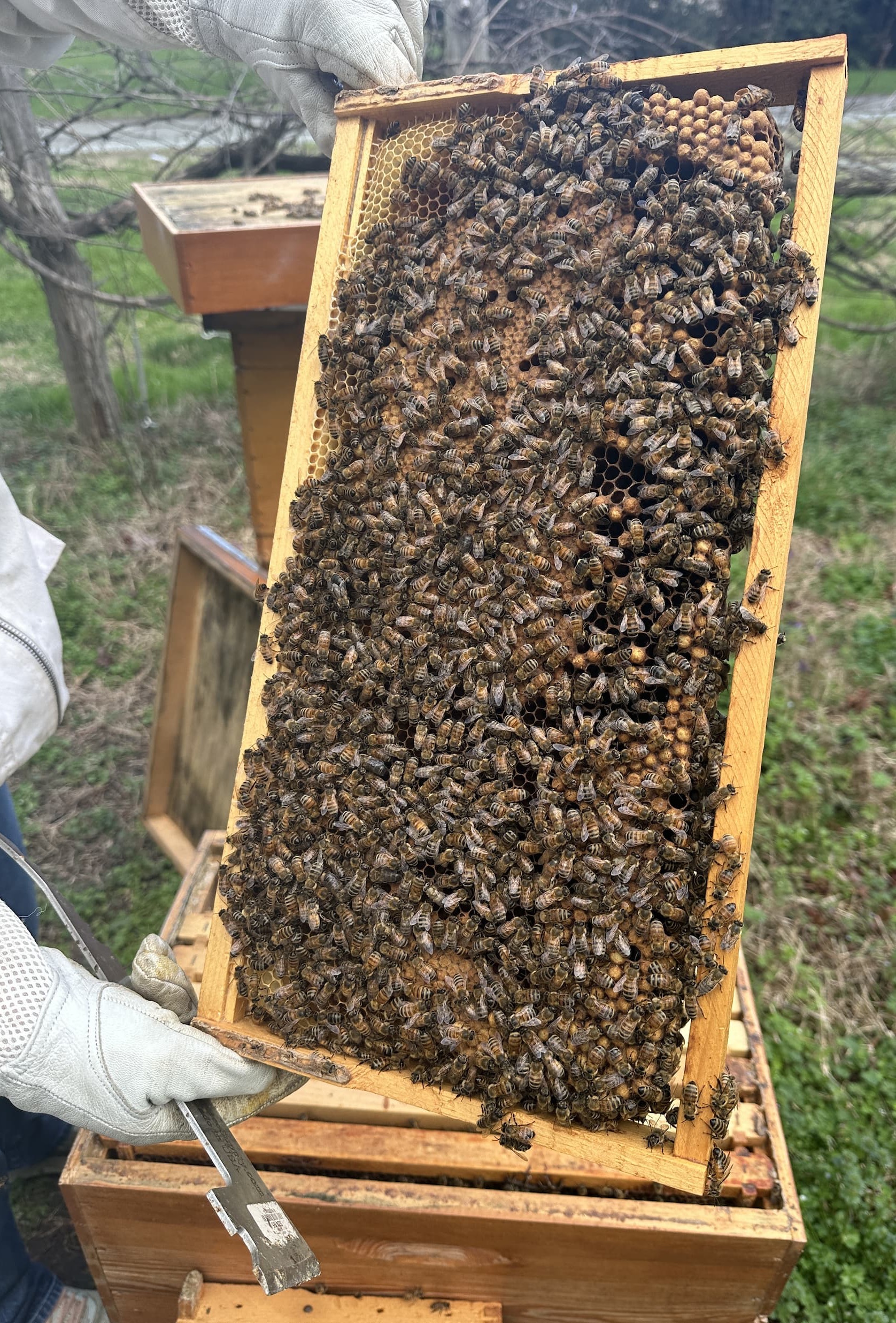
It is one of my favorite — and most exhausting — days of the year. There is something incredibly rewarding about seeing the season’s work come together, not just our work, but the work of thousands and thousands of bees who have spent the spring gathering nectar, building comb, tending the hive, and creating this beautiful golden honey. What has always fascinated me is how organized and purposeful a hive is. Every bee has a role, and the success of the colony depends on each one doing its part.
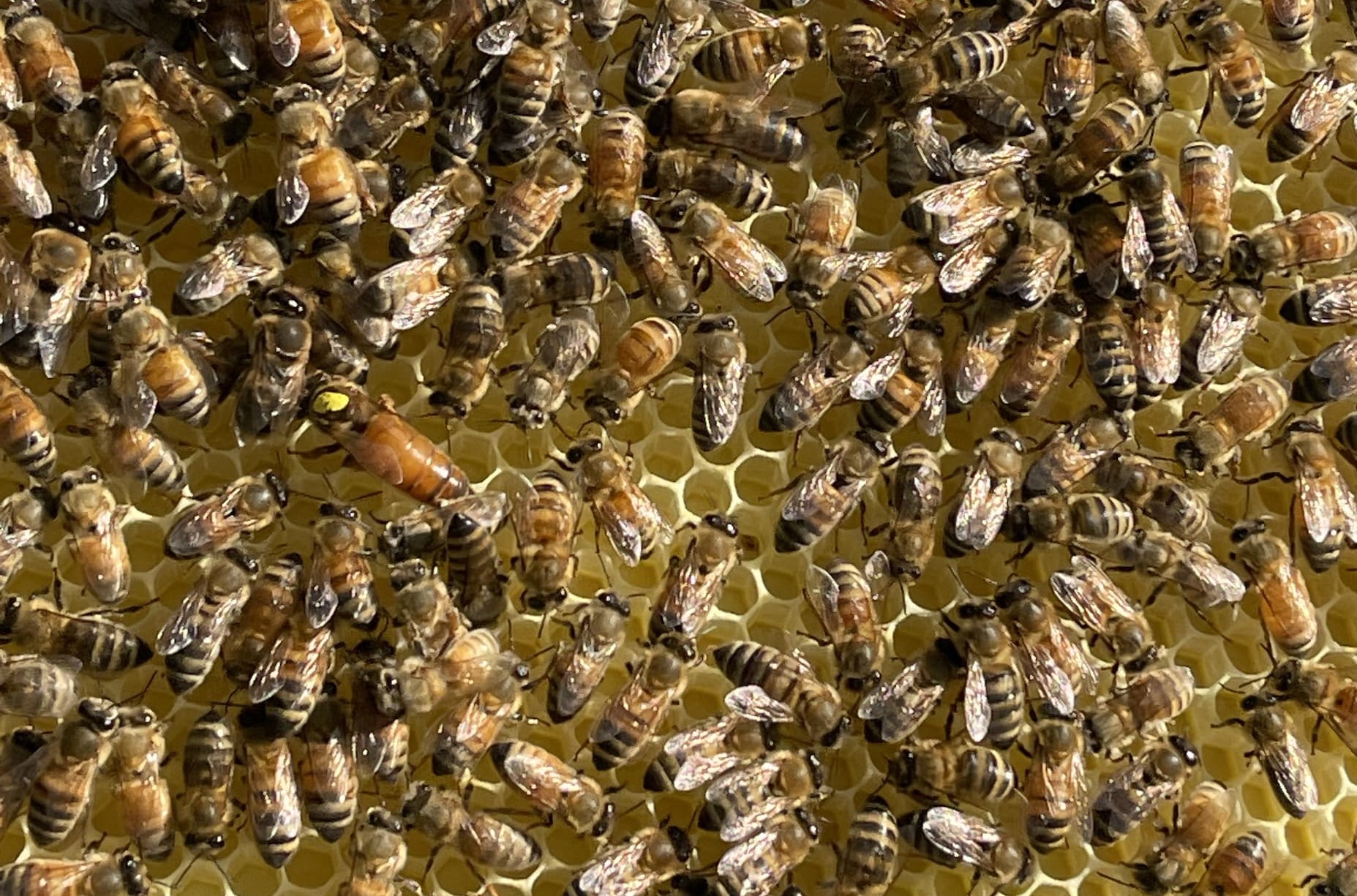
At the center of the hive is the queen. Her primary job is to lay eggs and keep the colony growing. A healthy queen can lay an astonishing number of eggs in a season, and the rest of the hive responds to her presence. The workers, who are all female, do nearly everything else. They clean the hive, feed the young, care for the queen, build wax comb, guard the entrance, forage for nectar and pollen, and turn nectar into honey. In the busy summer months, a worker bee may live only a few weeks, and in that short time she contributes to something much larger than herself.
The drones are the male bees. Their role is very different. They do not gather nectar or pollen, and they do not defend the hive. Their purpose is to mate with a queen, and once the colder months approach, they are typically pushed out of the hive so the colony can conserve resources for winter.
Earlier this spring, one of our hives swarmed, which is always a dramatic thing to witness. Swarming is the way a honey bee colony naturally reproduces.
When a hive becomes strong, crowded, or ready to expand, the old queen may leave with a large group of workers while the original hive raises a new queen. Luckily for us, our swarm settled in a nearby tree, and we were able to catch it and return it to a new hive. It is always a relief when a swarm stays close enough to retrieve.
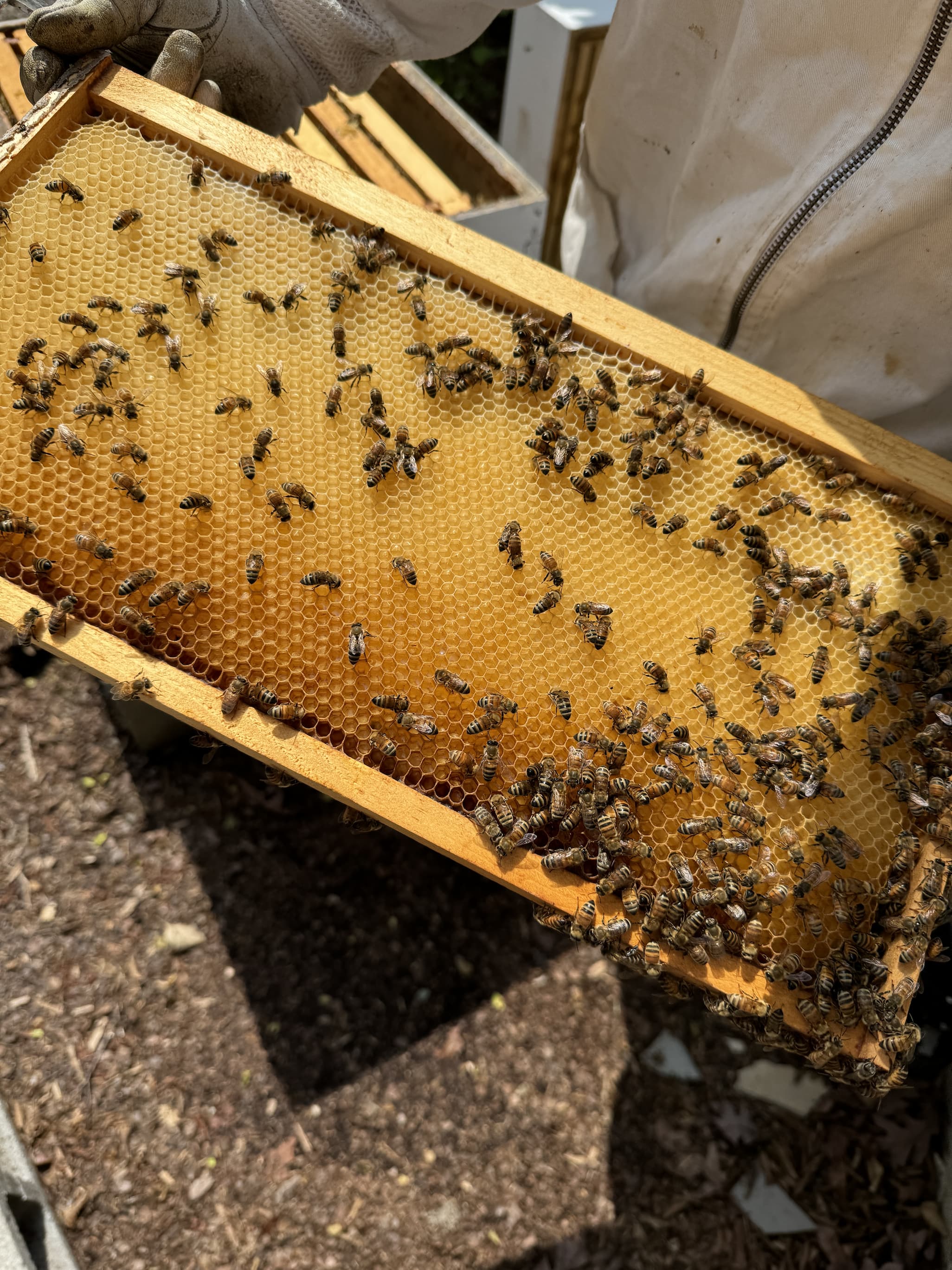
This year, we had five hives and placed seventeen supers on them. A super is the box that sits above the main hive body, where the bees store the honey we eventually harvest.
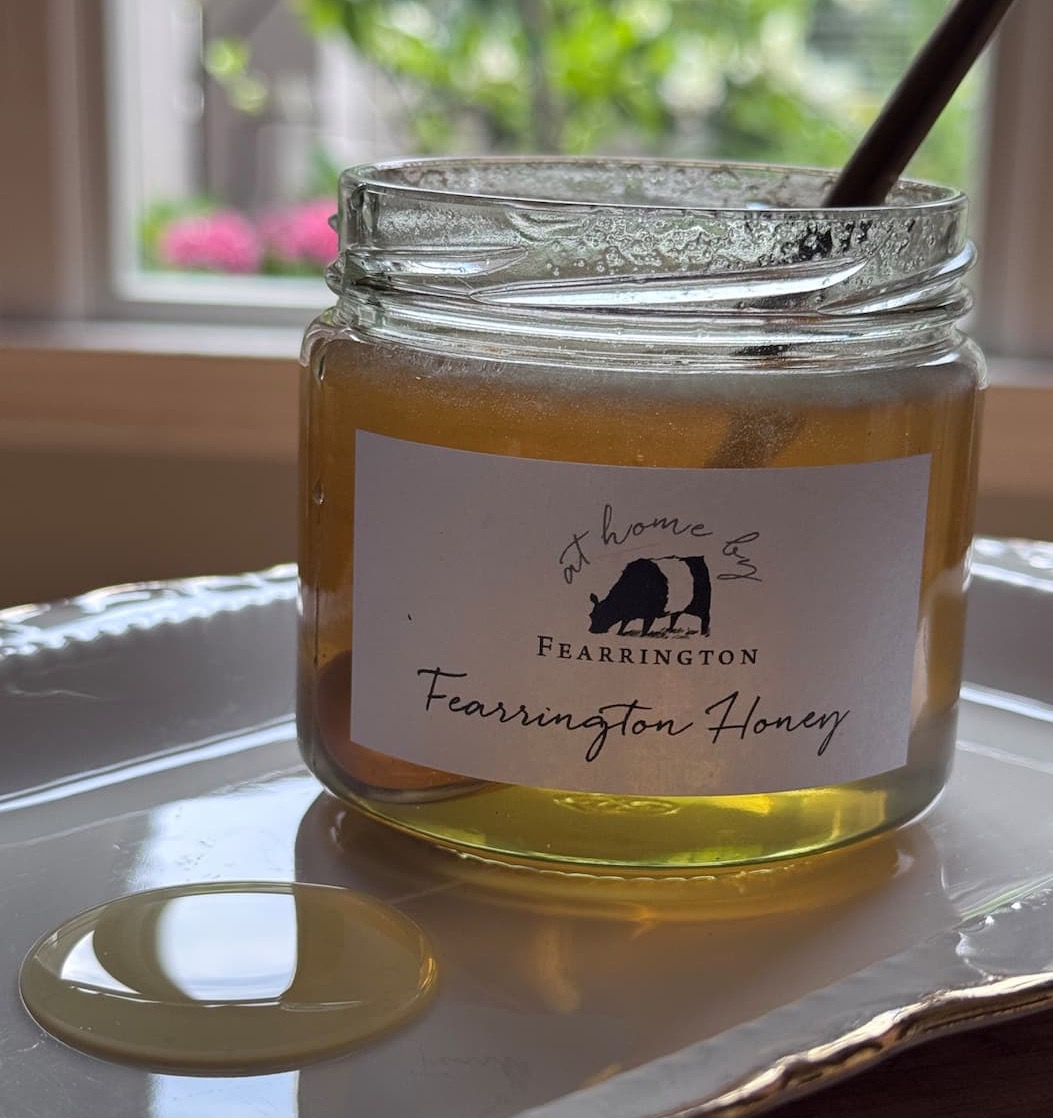
In late May, we harvested one super and were able to collect about thirty pounds of honey. We filled twelve jars, and the rest was given to The Fearrington House kitchen to use. That first honey was a pale golden color — light, delicate, and beautiful.
Three weeks later, we harvested the rest of the hives. This time, the honey was a deeper golden color, and we collected about 150 pounds. It always amazes me how honey can change from one harvest to the next. The color, aroma, and flavor are all influenced by what is blooming and where the bees have been foraging.
The harvesting itself is a long and tedious process, usually taking six to eight hours from start to finish. Frame by frame, we uncap the wax and place the frames into the honey spinner. As the spinner turns, the honey is drawn out of the comb and begins to collect. The scent that wafts from the spinner is incredible — warm, floral, rich, and almost impossible to describe. It smells like the gardens, the season, and the work of the hive all at once.
I am also happy to report that I only got stung once this year, which I consider a great success.
Once the honey is harvested, we return the frames to the bees so they can clean them. They are remarkably efficient. After the bees have finished their work, we freeze the frames for 48 hours, then wrap and store the combs for next year. Drawn comb is incredibly valuable to a hive because it saves the bees the tremendous effort of rebuilding from scratch.
Now that the harvest is complete, our work shifts to caring for the bees through the rest of the season and preparing them for winter.
We will begin feeding them sugar water so they have enough reserves stored away. In our early years of beekeeping, we often lost hives during the winter, which was heartbreaking. Over the past three years, we have been much more successful, and I truly believe it is because we have been more intentional about making sure they have enough food to survive the cold months.
Once the temperature drops below 60 degrees, we will no longer open the hives. At that point, the bees need to be left alone to do what bees do best — organize, conserve, cluster, and carry themselves through winter.
Beekeeping is humbling. You can do everything you think is right and still be reminded that nature has the final say. But when the hives are healthy, the bees are active, and the honey begins to flow from the spinner, it feels like a small miracle.
And this year, it was a very sweet one.
Our Fearrington honey is now available for sale at The Belted Goat and online, while supplies last. Each jar is a little taste of the Village — the gardens, the fields, the flowers, and the remarkable work of our bees.